
Draftbit vs Thunkable: Stop paying Thunkable and your published app stops working.
A Draftbit app is yours to keep: on Standard and up the code exports as an ordinary React Native and Expo project, and an app you've published stays in the App Store and Google Play under your own developer accounts. Thunkable's pricing page says that "if your subscription expires, any published apps will become unavailable for your end users", so before you pick, decide whether your app has to outlast the subscription you made it on.
By Brian Luerssen, Founder of Draftbit. Facts checked . Published by Draftbit, one of the two products compared.
Which should you choose?
Choose Draftbit if
- You want the app you've published to stay in the stores if you ever stop paying for the tool you made it in.
- You want the source code, as an ordinary React Native and Expo project a developer can pick up.
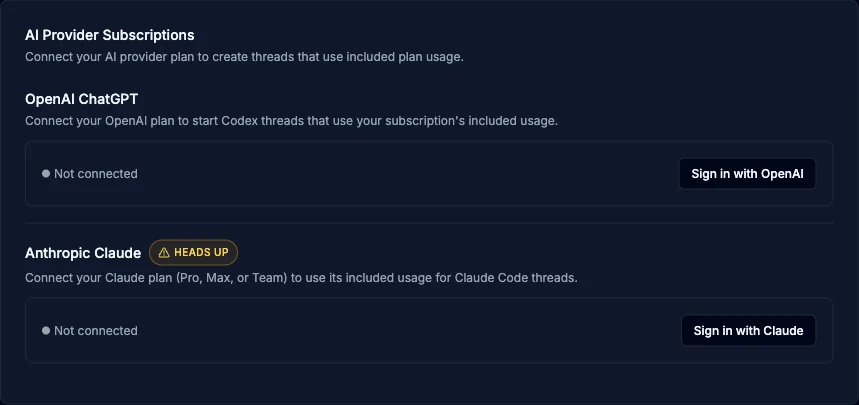
- You already pay for Claude or ChatGPT and would rather build on that than on a monthly token allowance.
- You want the website, the admin web app, and the backend in the same project as the mobile app.
Choose Thunkable if
- You're learning or teaching how apps work. Thunkable has special plans and pricing for students, teachers, and districts.
- You'd rather see your app's logic as blocks you can drag around than as code.
- You want your data in a Supabase account that's yours from the first day.
Draftbit vs Thunkable at a glance
With both tools you describe an app and get a native one for iOS and Android, so these rows are about what you're left holding afterward, and what happens to it when a subscription ends.
| What's compared | Draftbit | Thunkable |
|---|---|---|
| If you stop paying | ||
| Published apps | An app already in the App Store or Google Play stays there, under your own developer accounts. A web app stays up on its draftbit.dev address. | Its pricing FAQ says "any published apps will become unavailable for your end users". Source : Thunkable on published apps |
| Your projects | Nothing is deleted. On Free you lose code export and store publishing, and a custom domain is disconnected after 30 days. | Private projects become read-only, and after a downgrade to Free they "may be deleted after inactivity for a significant amount of time". Source : Thunkable on your projects |
| The code | ||
| Export | ZIP and GitHub export on Standard and up, as an ordinary React Native and Expo project. | A code editor inside Thunkable. We couldn't find a way to export or download the source. Source : Thunkable on export |
| Editing | Visual editor on every plan. Code editing on Standard and up. | An AI builder, a visual editor, and a code editor in one project, plus the older drag-and-drop blocks builder. Source : Thunkable on editing |
| Learning and teaching | No blocks. The agents write TypeScript, and you can view a selected component's code on Free. | Drag-and-drop blocks, and special plans and pricing "for students, teachers, and districts". Source : Thunkable on learning and teaching |
| The AI | ||
| What you build on | Your own Claude or ChatGPT subscription or API key on every plan, Free included, or Draftbit credits. | AI tokens that come with the plan: 2,000 once on Free, then 20,000 to 100,000 a month. We couldn't find a way to bring your own AI. Source : Thunkable on what you build on |
| The backend | ||
| Where your data lives | An API backend in your project on Cloudflare D1, Supabase, or your own Postgres. A Supabase backend we set up needs a paid plan for staging and production until you move it into your own account. | On the device, or in a Supabase project in your own Supabase account from the start. Source : Thunkable on where your data lives |
| Publishing | ||
| App Store and Google Play | Built, signed, and uploaded to App Store Connect and Google Play from the Publish menu, on Standard and up. | Published to Google Play and the App Store from Thunkable. Its docs put the App Store on Builder and up. Source : Thunkable on app store and google play |
Thunkable
- Build the app
- Publish to the stores
- Stop paying (you do this yourself)
- Published app (not available)
- Editing the project (not available)
Draftbit
- Build the app
- Publish to the stores
- Export the code
- Stop paying (you do this yourself)
- Published app
- New store releases (not available)
What happens when you stop paying
With Thunkable, a published app is available only while the subscription is active, and a Draftbit app you’ve published stays in the stores under your own developer accounts.
Thunkable’s pricing FAQ says that “if your subscription expires, any published apps will become unavailable for your end users”. The same answer makes an exception for Pro and Business plans, which aren’t on its pricing page today.
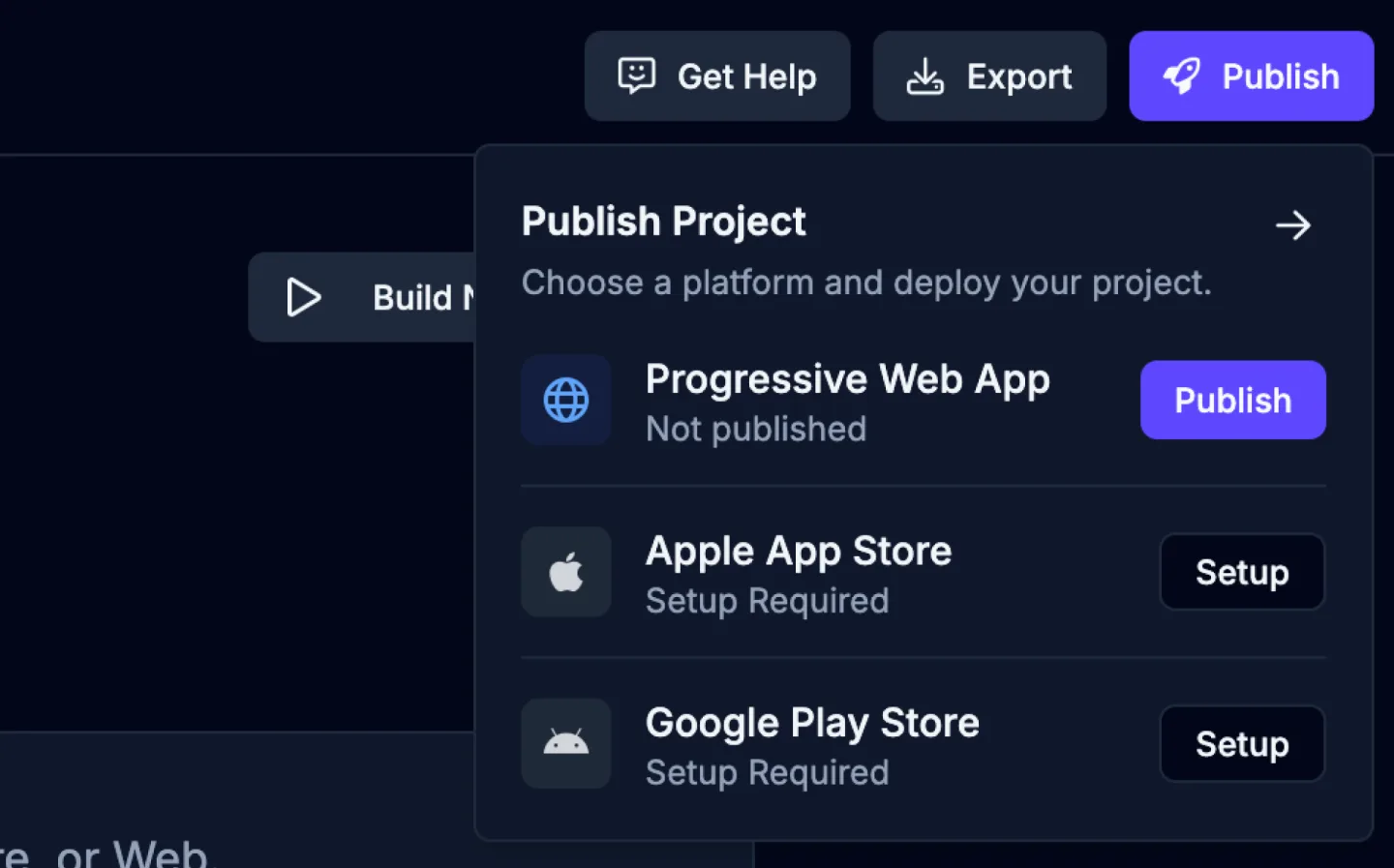
In Draftbit, a release is built, signed, and uploaded to App Store Connect and Google Play under your own developer accounts, so the app you’ve published stays there if you cancel. Nothing is deleted either, and on Free your web app stays up on its draftbit.dev address. Some things do need a plan, though. Publishing a new version to the stores needs Standard, a custom domain is disconnected 30 days after a downgrade, and a Supabase backend we set up needs a paid plan for staging and production unless you move it into your own Supabase account.
Getting the code out
In Draftbit, each app in a project exports on Standard and up, and we couldn’t find a way to export source code from Thunkable.
Thunkable does have a code editor, and its docs say “Users can edit their app code directly from the code editor”. What we couldn’t find on its site is a way to download that code or sync it to GitHub, since the downloads its pricing page describes are of the built app. So if handing the code to a developer matters to you, ask Thunkable first.
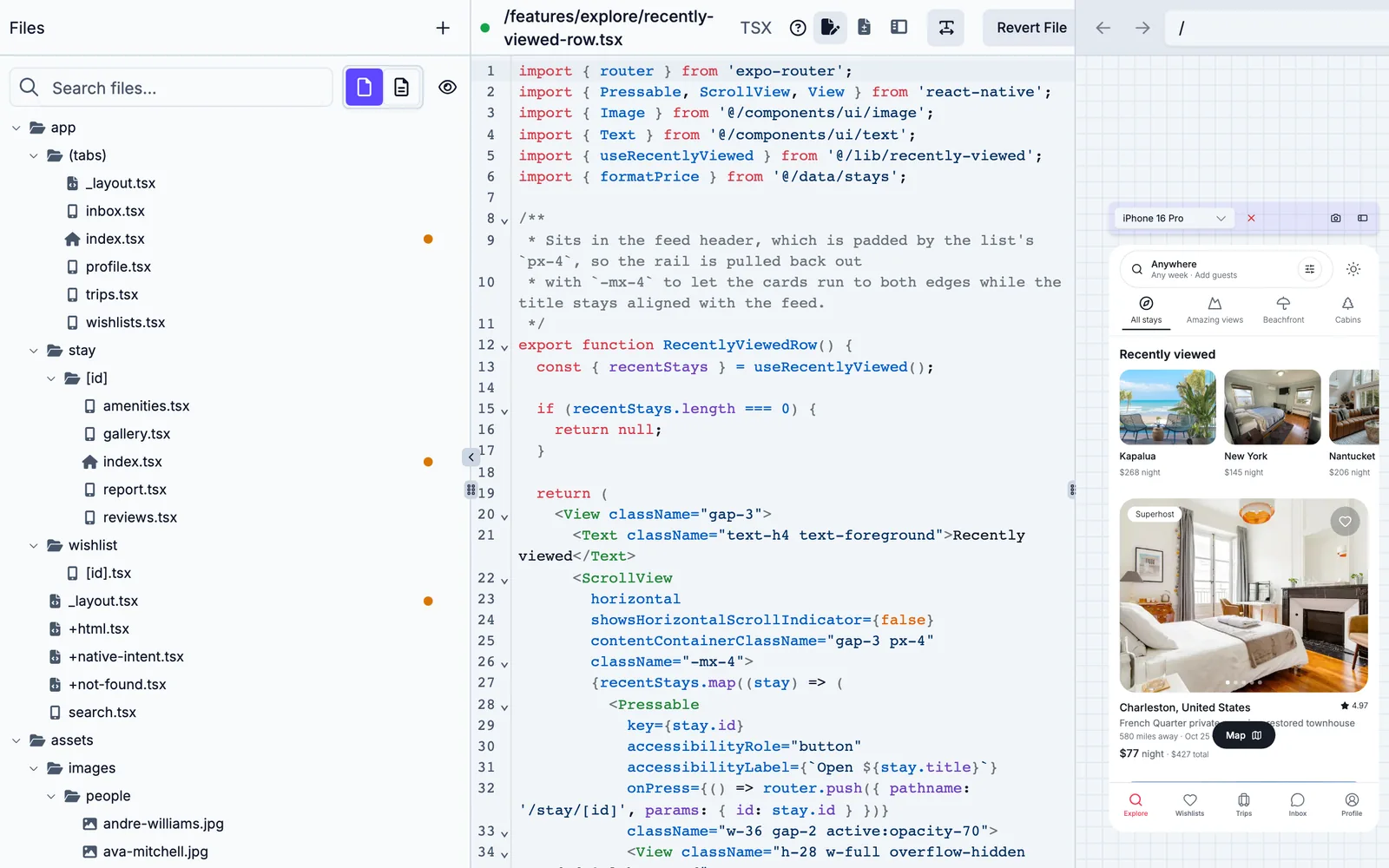
All of the code that Draftbit produces for mobile apps is React Native and Expo, and on Standard and up you can download it as a ZIP or export it to GitHub. Export is a paid feature and it works one app at a time, which means the time to take a final copy of each app, the backend included, is before a plan ends.
Where your data lives
This one goes to Thunkable, because the cloud database behind a Thunkable AI app is in your own Supabase account from the first day.
Its docs say “Your Supabase project belongs to your own Supabase account”, so whatever happens to the app, the data is already somewhere you control.
In Draftbit, the backend is another app in your project, on Cloudflare D1, Supabase, or a Postgres database you already run. If you’d rather we set up Supabase for you, that project stays in our Supabase organization until you move it into yours, and its staging and production environments need a paid plan and use credits while they run. What you get on our side is the backend’s code in the same project as the app.
Blocks, or agents on your own AI
If you’re learning or teaching how an app’s logic fits together, we’d point you to Thunkable, and if you already pay for Claude or ChatGPT, you can build on that in Draftbit.
Thunkable still has its drag-and-drop blocks builder, and it has special plans and pricing for students, teachers, and districts. Its newer AI builder runs on tokens that come with the plan, and on Free those are “a one-time balance that does not refill”.
In Draftbit, Claude Code and Codex write the app as TypeScript, and on every plan, Free included, they can run on your own Claude or ChatGPT subscription or API key without using Draftbit credits. Your provider’s limits still apply. We sell credits too, for anyone who’d rather not connect an account.
What you'll pay
Draftbit Standard
$15/month; or $144/year ($12/month equivalent)
Base subscription with code editing, ZIP and GitHub export, custom domains, and iOS/Android publishing. AI usage is separate.
Thunkable Accelerator
$19/month, billed monthly
20,000 AI tokens a month, 5 public projects, 1 private project, and 10 screens per project.
If you already pay for Claude or ChatGPT, that subscription does the building in Draftbit, so Standard stays at $15 a month, and it includes publishing to both stores. If you'd rather not connect a subscription, you can add Draftbit credits to the plan, from $5 a month for 5,000. Thunkable's first paid plan, Accelerator, is $19 a month with 20,000 AI tokens, and its docs put App Store publishing on Builder, which is $59 a month on monthly billing with 50,000 tokens. Its yearly rates were lower on the day we checked, under a Black Friday banner, and since a published Thunkable app is available only while the subscription is active, that's a cost for as long as the app is live.
Prices are in US dollars and were checked on November 23, 2026. See every Draftbit plan and Thunkable's current pricing.
What other sites get wrong about Draftbit
Many comparisons on other sites describe an older Draftbit. Here's what they say, and what's true today.
- Claim Draftbit is a drag-and-drop builder.
- Fact Claude Code and Codex build the app from what you describe. The visual editor is for the changes you'd rather make by hand, and it edits the same code. Read more
- Claim Draftbit has no backend.
- Fact A project can hold an API backend with its own database, or a Supabase backend we set up for you and you can move into your own account. Read more
- Claim You have to buy AI credits.
- Fact You can build on your own Claude or ChatGPT subscription, or your own API key, on every plan, Free included. We sell credits too, for anyone who'd rather buy them from us. Read more
- Claim Draftbit only makes mobile apps.
- Fact It builds mobile apps, web apps, websites, games, and backends, and one project can hold all of them. Read more
What's new at Thunkable. Thunkable now leads with Thunkable AI, where you describe the app and it's built on a monthly allowance of AI tokens, next to its older drag-and-drop blocks builder. Its docs also describe a cloud database for those apps that lives in your own Supabase account, and its pricing page lists an Accelerator plan at $19 a month.
Switching from Thunkable
If your app is live on Thunkable, keep the subscription running until its replacement is published, because Thunkable's pricing page says published apps become unavailable when a subscription expires.
We couldn't find a way to export source code from Thunkable, and what you can import into Draftbit is a JavaScript or TypeScript project, so the move is a rebuild with your Thunkable app as the reference. Describe each screen and what its logic does, and the agent writes that as TypeScript while you adjust the layout by hand in the visual editor.
The data is the easy part if you used Thunkable's cloud database, because that Supabase project is already in your own Supabase account. In Draftbit you can connect it by signing in to Supabase, so the agent can work with the tables you already have.
What Draftbit can import and how Draftbit Experts can do the move for you.
In customers' words
“What helped me the most was the level of freedom it gives you to build a truly professional app without feeling locked into a closed system.”
“The visual builder let me focus on features and UX, while the clean code export meant I wasn’t locked in.”
Test it yourself
Don't take our word for it. Try these in both tools before you decide. Draftbit's Free plan is enough to run them.
- Read what each tool's site says happens when you cancel, then decide whether the app you publish has to outlast the subscription.
- Build the screen you're least sure about in both tools, then change one small thing on it by hand, such as a label or a margin.
- Work out how you'd hand the app to a developer in each: look for a source export in Thunkable, and open the Code tab on a screen in Draftbit.
Frequently asked questions
What happens to my Thunkable app if I stop paying?
Thunkable's pricing FAQ says that if your subscription expires, your private project is set to read-only and "any published apps will become unavailable for your end users". It makes an exception for Pro and Business plans, which aren't on its pricing page today. It also says that after a downgrade to Free, projects "may be deleted after inactivity for a significant amount of time".
What happens to my Draftbit app if I cancel?
Nothing is deleted. An app you've published to the App Store or Google Play stays there under your own developer accounts, and a web app stays up on its draftbit.dev address. On Free you can't export code or publish new versions to the stores, a custom domain is disconnected after 30 days, and a Supabase backend we set up needs a paid plan for staging and production unless you move it into your own Supabase account. So export your code before the paid period ends.
Can I export my Thunkable app's source code?
We couldn't find a way to on Thunkable's site. Its docs describe a code editor inside Thunkable AI projects and downloads of the built app, and we found nothing about exporting a source project or syncing to GitHub. If you need to hand the code to a developer, ask Thunkable to confirm how before you build.
Who owns the code in each?
We couldn't find a statement about code ownership on the Thunkable pages we read, which didn't include its terms of service, so ask before you rely on one. In Draftbit, the code created in your project belongs to you, and ZIP and GitHub export are part of Standard and every plan above it.
Is Draftbit cheaper than Thunkable?
For an app in both stores, yes on the plan price. Standard is $15 a month if you bring your own AI, or $15 plus a credit add-on that starts at $5 a month for 5,000 credits, and it includes iOS and Android publishing. Thunkable's first paid plan, Accelerator, is $19 a month, and its docs put App Store publishing on Builder, which is $59 a month on monthly billing. Its yearly rates were lower on the day we checked, under a Black Friday banner.
Can I move my Thunkable app to Draftbit?
Not by importing it. What you can import into Draftbit is a JavaScript or TypeScript project, and we couldn't find a source export on Thunkable's site, so the move is a rebuild with your Thunkable app as the reference. If you used Thunkable's cloud database, the data is in a Supabase project in your own account, and you can connect that project in Draftbit by signing in to Supabase.
Do Draftbit's paid plans include AI credits?
No. Standard is $15 a month and that doesn't include credits, because you can build on your own Claude or ChatGPT subscription, or your own API key, on every plan. If you'd rather use Draftbit credits, you can add them to any paid plan, from $5 a month for 5,000.
Sources
We publish Draftbit, so we have a stake in this comparison. Every fact about Thunkable comes from its own site and docs, checked on November 23, 2026.
Related comparisons
-
Draftbit vs Adalo
An Adalo app runs on Adalo, and the code costs extra.
-
Draftbit vs Bubble
On Bubble, you own your data and Bubble owns the code.
-
Draftbit vs FlutterFlow
With FlutterFlow, you have to pick a product.
Stop paying Thunkable and your published app stops working.
Start on the Free plan with the Claude or ChatGPT plan you already pay for. When you're ready for the stores, you publish on Standard under your own developer accounts, and the app stays there.