
Draftbit vs Bolt: With Bolt, publishing a mobile app starts with "download the code".
In Draftbit, you publish a mobile app from the Publish menu, where it's built, signed, and uploaded to App Store Connect and Google Play, and you can build it on the Claude or ChatGPT subscription you already pay for. With Bolt you build on tokens, and its own guide to publishing an Expo app starts with downloading the code and opening it in a code editor, so the release happens on your computer with Expo's command-line tools.
By Brian Luerssen, Founder of Draftbit. Facts checked . Published by Draftbit, one of the two products compared.
Which should you choose?
Choose Draftbit if
- You want your app in the App Store and Google Play without installing developer tools on your computer.
- You already pay for Claude or ChatGPT and would rather build on that than on tokens.
- You want to pick the agent and the model yourself, Claude Code or Codex.
- You want the mobile app, the web app, the website, and the backend in one project.
Choose Bolt if
- You're building a web app and want hosting, a domain, and a database without setting up other accounts.
- You're at home in a terminal, so running Expo's build tools yourself for each release doesn't slow you down.
- A developer will work in the repository too. Bolt's GitHub sync goes both ways. In Draftbit that needs an app connected to a repository you already have, because GitHub export goes one way.
- You don't have an AI subscription and want a free allowance that renews. Bolt's Free plan includes 1 million tokens every month, and the 5,000 credits on ours are a one-time grant.
Draftbit vs Bolt at a glance
With both tools you describe a mobile app and get an Expo project, so these rows are about how that project reaches the stores, what you build it on, and what happens to the backend and the code.
| What's compared | Draftbit | Bolt |
|---|---|---|
| Publishing a mobile app | ||
| App Store and Google Play | Built, signed, and uploaded to App Store Connect and Google Play from the Publish menu, on Standard and up. | Outside Bolt. Its guide starts, "download the code and open it in a code editor such as VS Code", and continues in a terminal with Expo's build tools. Source : Bolt on app store and google play |
| What you need installed | Nothing on your computer. You enter your Apple and Google developer account details once on the Publishing page. | "A computer with Node.js LTS and Git installed", an Expo account, and Expo's command-line tool, plus the Apple and Google developer accounts. Source : Bolt on what you need installed |
| Updating a published app | Publish again from the same menu with a new version number. | "Download the updated code from Bolt", then "rebuild and resubmit". Source : Bolt on updating a published app |
| The AI | ||
| What you build on | Your own Claude or ChatGPT subscription or API key on every plan, Free included, or Draftbit credits. | Bolt tokens. "Each plan includes a monthly token allocation, and your subscription determines how many you get." Source : Bolt on what you build on |
| Agent and model | Claude Code or Codex, with a model picker on each thread. | Two agents, Standard and Max. "You choose the agent that matches your work, and Bolt handles model selection behind the scenes." Source : Bolt on agent and model |
| The backend | ||
| Database and sign-in | An API backend in your project on Cloudflare D1, Supabase, or your own Postgres, or a Supabase backend we set up for you. That one needs a paid plan for staging and production. | A built-in database with sign-in, file storage, and server functions on every plan, Free included. Source : Bolt on database and sign-in |
| Moving it to your own account | A Supabase backend we set up can be moved into your own Supabase account. The move can't be undone. | On Pro or Teams, a Bolt database can be claimed into your own Supabase account. That move is one way too. Source : Bolt on moving it to your own account |
| The code | ||
| Editing code | Code editing on Standard and up. The visual editor is on every plan. | A Code view where editing by hand doesn't use tokens, even after the Free plan's daily limit. Source : Bolt on editing code |
| GitHub | One-way export to a branch you choose, on Standard and up. An app connected to your own repository saves to your branch, and Sync brings in commits made outside. | Two-way sync. In its docs, Bolt "checks GitHub every 30 seconds for any updates made outside Bolt and pulls those in". Source : Bolt on github |
Bolt
- Describe the app
- Expo app
- Download the code (you do this yourself)
- Install Node.js, Git, and Expo's tools (you do this yourself)
- Run the build commands (you do this yourself)
- Upload the Android build to Google Play (you do this yourself)
Draftbit
- Describe the app
- Expo app
- Build and sign
- Upload to App Store Connect
- Upload to Google Play
Getting the app into the stores
If the release is the part you’re dreading, this is the biggest difference, because in Draftbit it happens from a menu and with Bolt it happens on your computer.
Mobile apps in Bolt are Expo projects, the same as ours, and you can try one on your phone with Expo Go while you build. When it’s time to publish, though, Bolt’s guide begins, “After building your app with Bolt, download the code and open it in a code editor such as VS Code.” From there you install Node.js, Git, and Expo’s command-line tool, run the build commands in a terminal, and upload the Android build in Google Play Console. That’s an ordinary release for a developer, but you repeat it for every update, starting with a fresh download of the code.
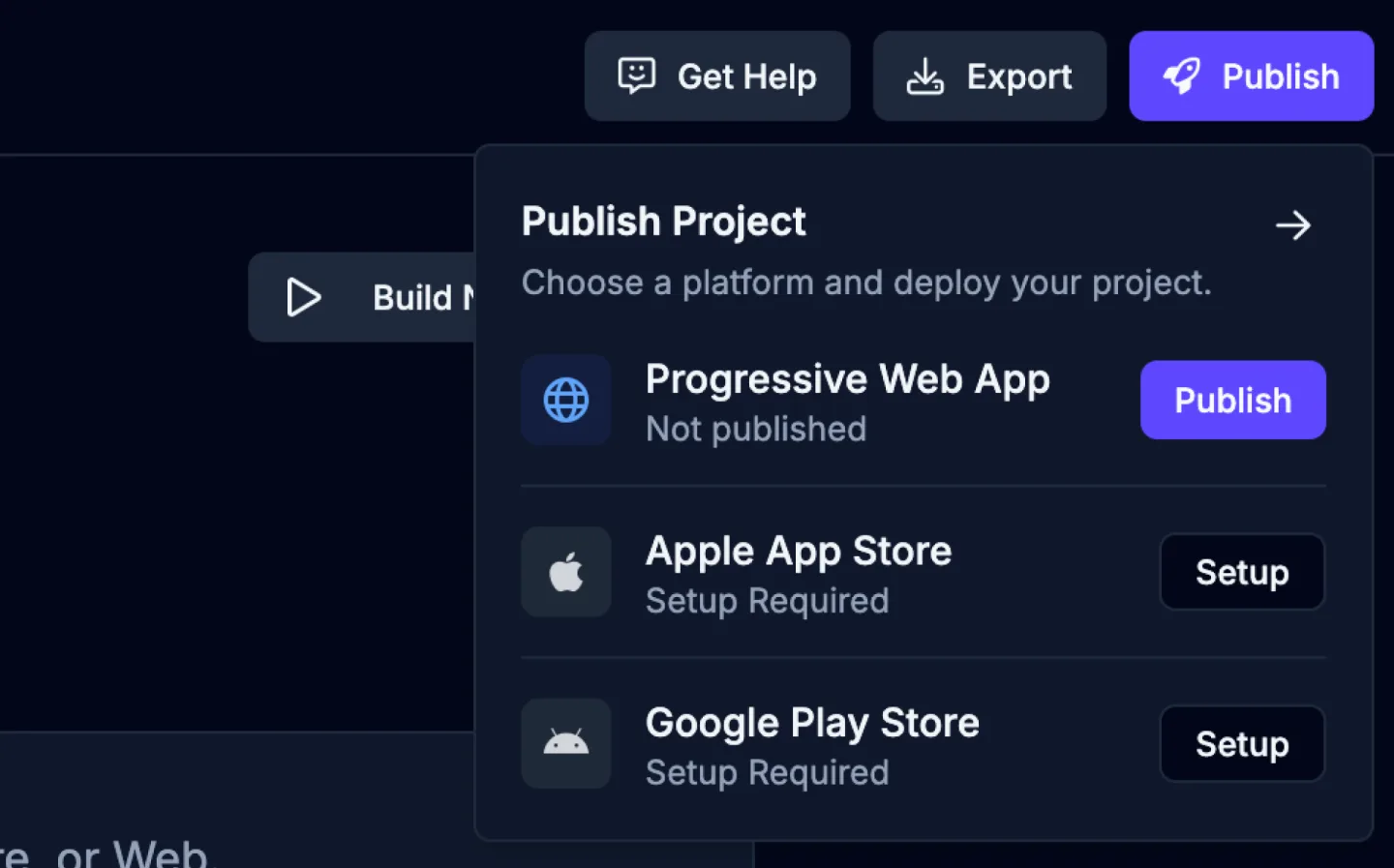
In Draftbit, once you’ve entered your Apple and Google developer account details, the app is built, signed, and uploaded to App Store Connect and Google Play from the Publish menu, on Standard and up. Apple and Google still review it and decide when it goes live.
What you build on
With Bolt you build on the tokens that come with your plan, and in Draftbit you can build on the Claude or ChatGPT subscription you already pay for.
Every Bolt plan includes a monthly token allocation, from 1 million tokens on Free to 10 million on the first Pro tier. You choose between two agents, Standard and Max, and its docs say, “Bolt handles model selection behind the scenes.” We couldn’t find a way on Bolt’s site to build on your own subscription or API key.
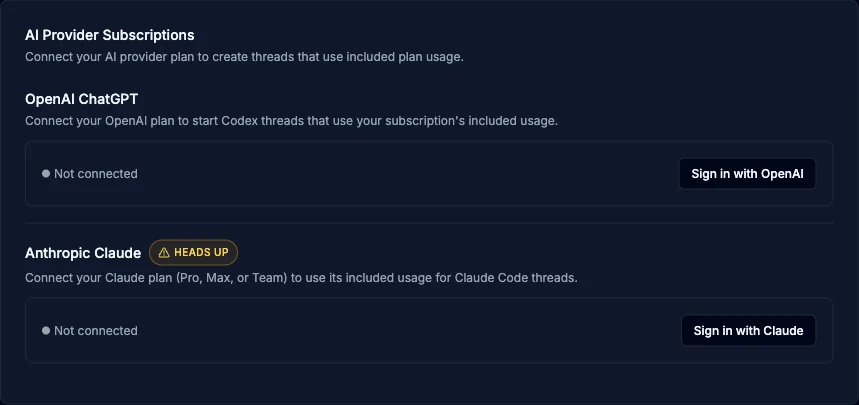
On every Draftbit plan, Free included, you can sign in with your ChatGPT or Claude subscription or add your own API key, and threads that run on it don’t use Draftbit credits. Your provider’s usage limits still apply. We sell credits as well, for anyone who’d rather not connect an account.
The backend behind the app
You get more backend on Bolt’s Free plan than on ours, and with both tools you can move the database into your own account later.
Every Bolt plan comes with a built-in database with sign-in, file storage, and server functions, alongside hosting and domains, so in Bolt’s words “you don’t need to create extra accounts or connect outside services”. On Pro or Teams you can claim that database into your own Supabase account. That move goes one way.
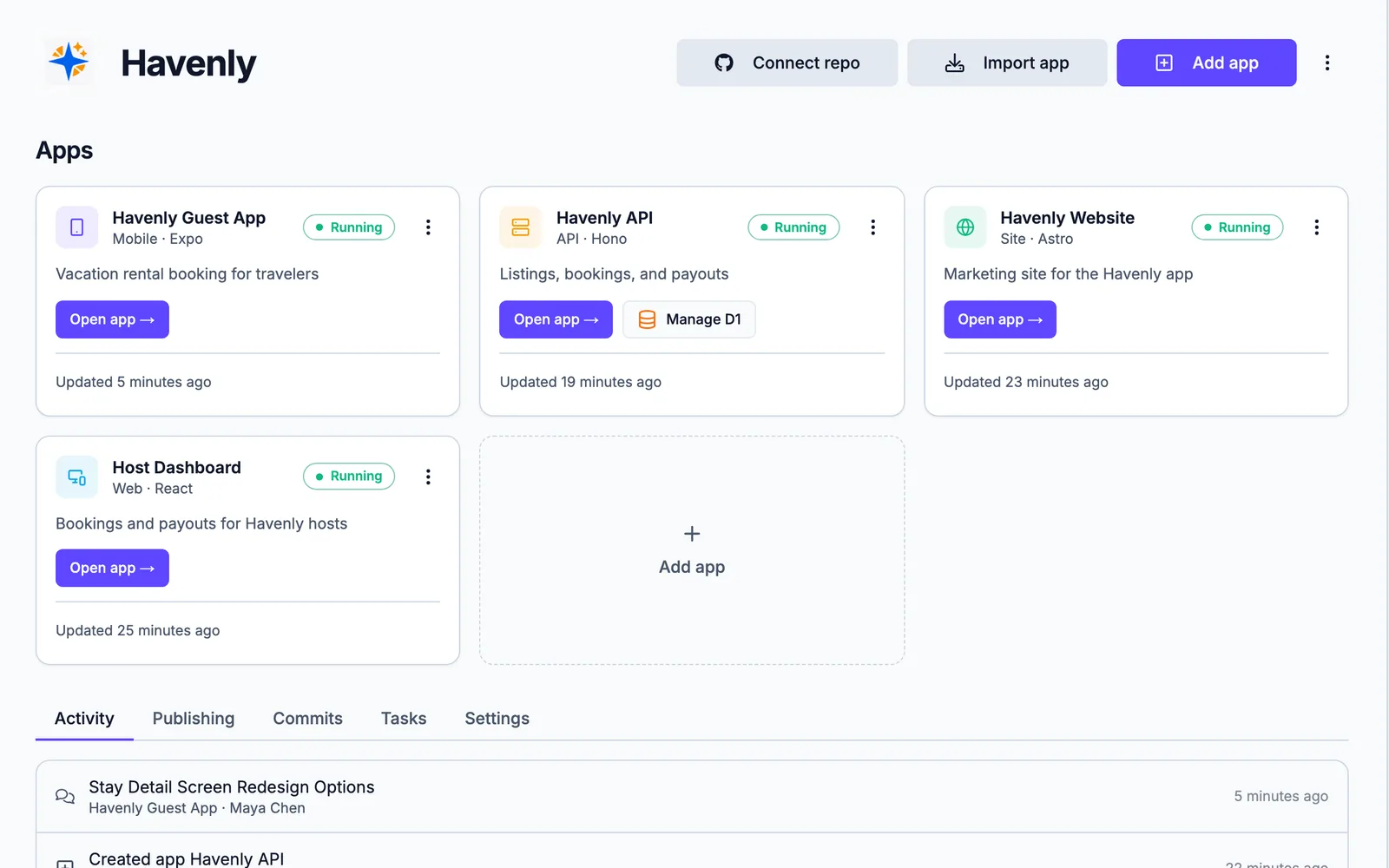
In Draftbit, the backend is another app in your project. It can be an API backend on Cloudflare D1, Supabase, or a Postgres database you already run. Or we can set up a Supabase backend for you, which you can move into your own Supabase account, also one way. That one isn’t free past development, because its staging and production environments need a paid plan and use credits while they run.
Changing things yourself
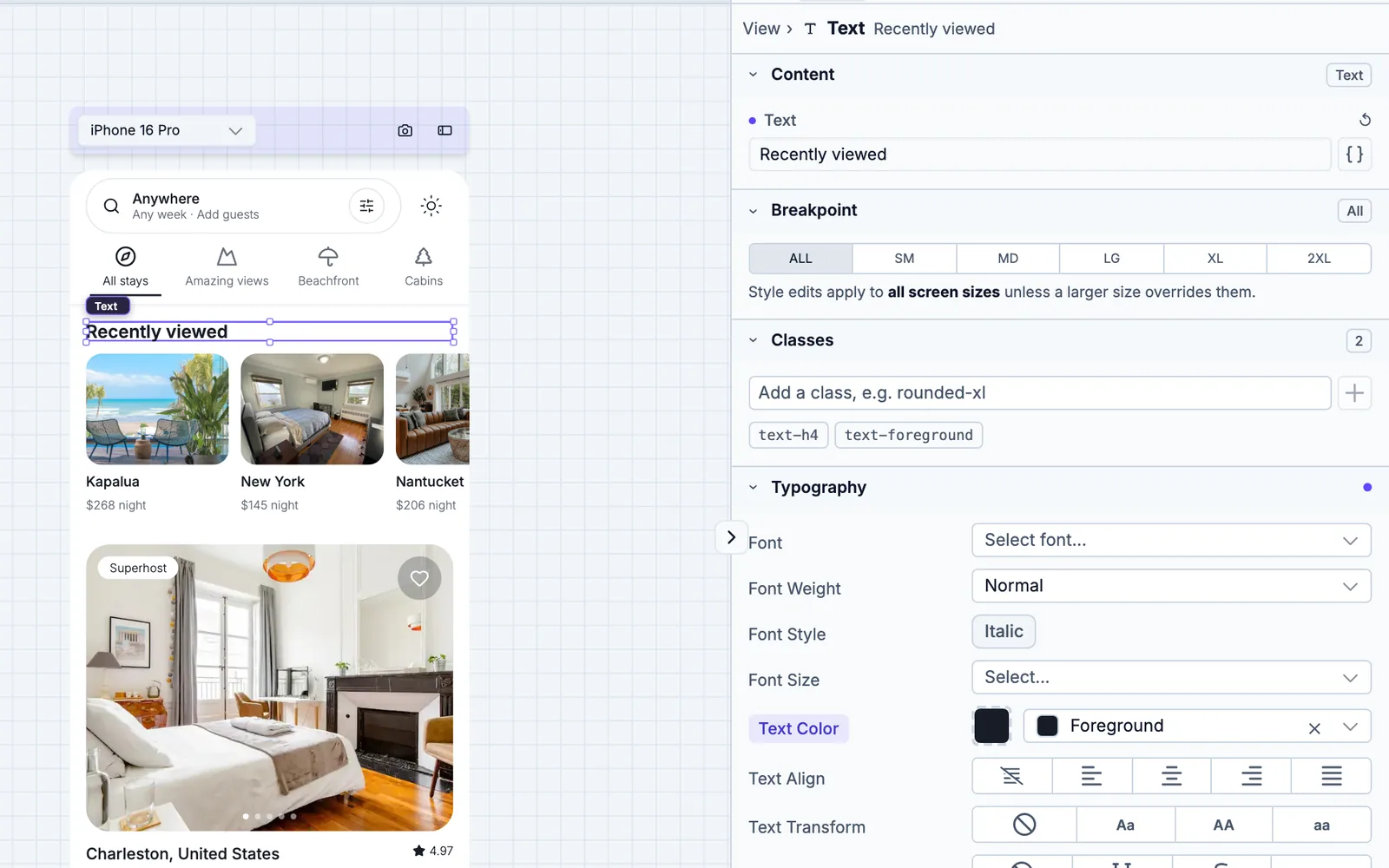
With both tools you can select something in the preview and change it by hand, and Bolt is ahead of us on code editing and GitHub.
Bolt’s visual edits work in the preview, editing code by hand in Code view doesn’t use tokens, and its GitHub sync goes both ways, so a developer’s commits come back into the project. In Draftbit, the visual editor is on every plan and works on the same source files as the agents, while code editing and export start on Standard. Our GitHub export goes one way, to a branch you choose. If a developer already has the app in a repository, you can connect that repository instead, so every save commits to your branch and Sync brings their commits in. For an app you started in Draftbit, though, that round trip is a point in Bolt’s favor.
What you'll pay
Draftbit Standard
$15/month; or $144/year ($12/month equivalent)
Base subscription with code editing, ZIP and GitHub export, custom domains, and iOS/Android publishing. AI usage is separate.
Bolt Pro
$25/month, or $216/year
Starts at 10 million tokens a month with no daily limit, and unused tokens roll over for up to two months. Adds custom domains and a choice of database provider, and removes Bolt branding. Larger token tiers cost more.
If you already pay for Claude or ChatGPT, that subscription does the building in Draftbit, so Standard stays at $15 a month, and publishing to both stores is part of it. If you'd rather not connect a subscription, you can add Draftbit credits to the plan, from $5 a month for 5,000. Bolt Pro is $25 a month and starts at 10 million tokens, with larger tiers at $50 and $100 a month, so what you spend depends on how many tokens your building uses. Releasing a mobile app from Bolt also needs an Expo account, which you set up separately.
Prices are in US dollars and were checked on November 23, 2026. See every Draftbit plan and Bolt's current pricing.
What other sites get wrong about Draftbit
Many comparisons on other sites describe an older Draftbit. Here's what they say, and what's true today.
- Claim Draftbit is a drag-and-drop builder.
- Fact Claude Code and Codex build the app from what you describe. The visual editor is for the changes you'd rather make by hand, and it edits the same code. Read more
- Claim Draftbit has no backend.
- Fact A project can hold an API backend with its own database, or a Supabase backend we set up for you and you can move into your own account. Read more
- Claim You have to buy AI credits.
- Fact You can build on your own Claude or ChatGPT subscription, or your own API key, on every plan, Free included. We sell credits too, for anyone who'd rather buy them from us. Read more
- Claim Draftbit only makes mobile apps.
- Fact It builds mobile apps, web apps, websites, games, and backends, and one project can hold all of them. Read more
What's new at Bolt. In the week of November 9, 2026, Bolt capped its Free plan at 3 collaborators per project and stopped project transfers between two Free accounts. Since October 30, 2026, tables in a Bolt database are private by default, so an app needs explicit permission to read or write them.
Switching from Bolt
If you've built a mobile app in Bolt and the release is what's holding you up, that's the move we think is worth making. Mobile apps in Bolt are Expo projects, and you can import Expo apps into Draftbit from GitHub or a zip file, so the code you have comes with you.
When you import, you choose between two modes, and the choice is permanent for that project. You can have an agent migrate the app to Draftbit's conventions, which gets you the full builder and the visual editor at the cost of a large diff, or you can import it with minimal changes and work with the agent, the code, and a preview in a simpler builder. The import copies your code once and doesn't stay linked to the original, so finish or pause your work in Bolt first.
Your Bolt database doesn't travel with the code. On Bolt's Pro or Teams plan you can claim it into your own Supabase account, which keeps its data and can't be reversed, and from there the imported app can keep calling it like any backend you already run. Bolt's database view can also export the rows in a table.
If you also have a web app in Bolt, check which framework it uses before you plan that half of the move. You can import Vite web apps into Draftbit the same way as Expo apps.
What Draftbit can import and how Draftbit Experts can do the move for you.
In customers' words
“Using Draftbit NEXT alongside ChatGPT made the whole process feel collaborative rather than overwhelming, and together they helped me turn an idea into something real and genuinely cool.”
“What helped me the most was the level of freedom it gives you to build a truly professional app without feeling locked into a closed system.”
Test it yourself
Don't take our word for it. Try these in both tools before you decide. Draftbit's Free plan is enough to run them.
- Read Bolt's guide to publishing an Expo app from start to finish, then open the Publish menu in a Draftbit app, and decide which release you'd rather repeat every time you ship an update.
- Build the screen you're least sure about in both tools, change one small thing on it by hand, such as a label or a margin, and then ask the agent for the next feature.
- Price a month of building in each: the plan, plus what you'd spend on tokens or credits once the included amount runs out.
Frequently asked questions
Can Bolt build mobile apps?
Yes. Mobile apps in Bolt are Expo projects, so one codebase covers iPhone and Android, and you can test on your own phone with Expo Go while you build. Bolt's docs also say that projects created for web "do not easily switch over to mobile", so it's worth choosing mobile at the start.
How do you publish a Bolt app to the App Store or Google Play?
Outside Bolt. Its guide has you download the code, install Node.js, Git, and Expo's command-line tool, and run the build commands from a terminal. The iOS command builds the app and submits it to TestFlight, and for Android you upload the build in Google Play Console yourself. In Draftbit, both uploads happen from the Publish menu on Standard and up.
Can I use my own Claude or ChatGPT subscription with Bolt?
We couldn't find a way to on Bolt's site. Usage in Bolt is measured in tokens that come with your plan, and its docs say you choose between two agents while model selection happens behind the scenes. In Draftbit, you can connect a Claude or ChatGPT subscription, or your own API key, on every plan, and threads that run on it don't use Draftbit credits.
Do Draftbit's paid plans include AI credits?
No. Standard is $15 a month and that doesn't include credits, because you can build on your own Claude or ChatGPT subscription, or your own API key, on every plan. If you'd rather use Draftbit credits, you can add them to any paid plan, from $5 a month for 5,000.
Is Draftbit cheaper than Bolt?
It depends on what you already pay for. Draftbit Standard is $15 a month if you build on your own Claude or ChatGPT subscription, and Bolt Pro is $25 a month with 10 million tokens. If you don't have a subscription to connect, Standard with a $10 credit add-on comes to the same $25 and includes 10,000 credits, so compare how far the credits and the tokens go on your own app. The free plans work differently, though. Bolt's includes 1 million tokens that renew every month, and ours includes 20 agent runs a week on your own AI plus 5,000 one-time credits.
Can I move a Bolt app into Draftbit?
Yes, for mobile apps. Mobile apps in Bolt are Expo projects, and you can import Expo apps into Draftbit from GitHub or a zip file, either migrated to Draftbit's conventions by an agent or brought in with minimal changes. A Bolt database stays in Bolt unless you claim it into your own Supabase account, which needs Bolt's Pro or Teams plan.
Do I own the code in both?
Yes. Bolt's docs say "All code that you create with Bolt and StackBlitz is your own code", and you can download a project as a zip file or sync it with GitHub. In Draftbit the code is yours too, with ZIP and GitHub export on Standard and up.
Sources
We publish Draftbit, so we have a stake in this comparison. Every fact about Bolt comes from its own site and docs, checked on November 23, 2026.
- Bolt's guide to Expo apps and store publishing
- Bolt pricing
- Bolt billing and token allocations
- Bolt tokens, rollover, and Code view
- Bolt agents: Standard and Max
- Bolt Cloud: hosting, domains, and databases
- Bolt Database
- Using your own Supabase account with Bolt
- Bolt visual edits
- Bolt GitHub integration
- Bolt on code ownership
- Bolt projects and files, including ZIP download
- Bolt release notes
Related comparisons
-
Draftbit vs Lovable
With Lovable, your app stops at the browser.
-
Draftbit vs Replit
You can't publish to Google Play from Replit.
-
Draftbit vs a0
The code is the same in a0 and Draftbit. The difference is what else you get.
With Bolt, publishing a mobile app starts with "download the code".
If you'd rather publish from a menu than from a terminal, build your app on the Free plan with the Claude or ChatGPT plan you already pay for, and move to Standard when it's ready for the App Store and Google Play.