

How I built my first game, Rooftail, in Draftbit
How the Sketch Jump template turned into Rooftail, a one-button rooftop game with a changing city, weather, sounds, and a world leaderboard, prompt by prompt over four days.
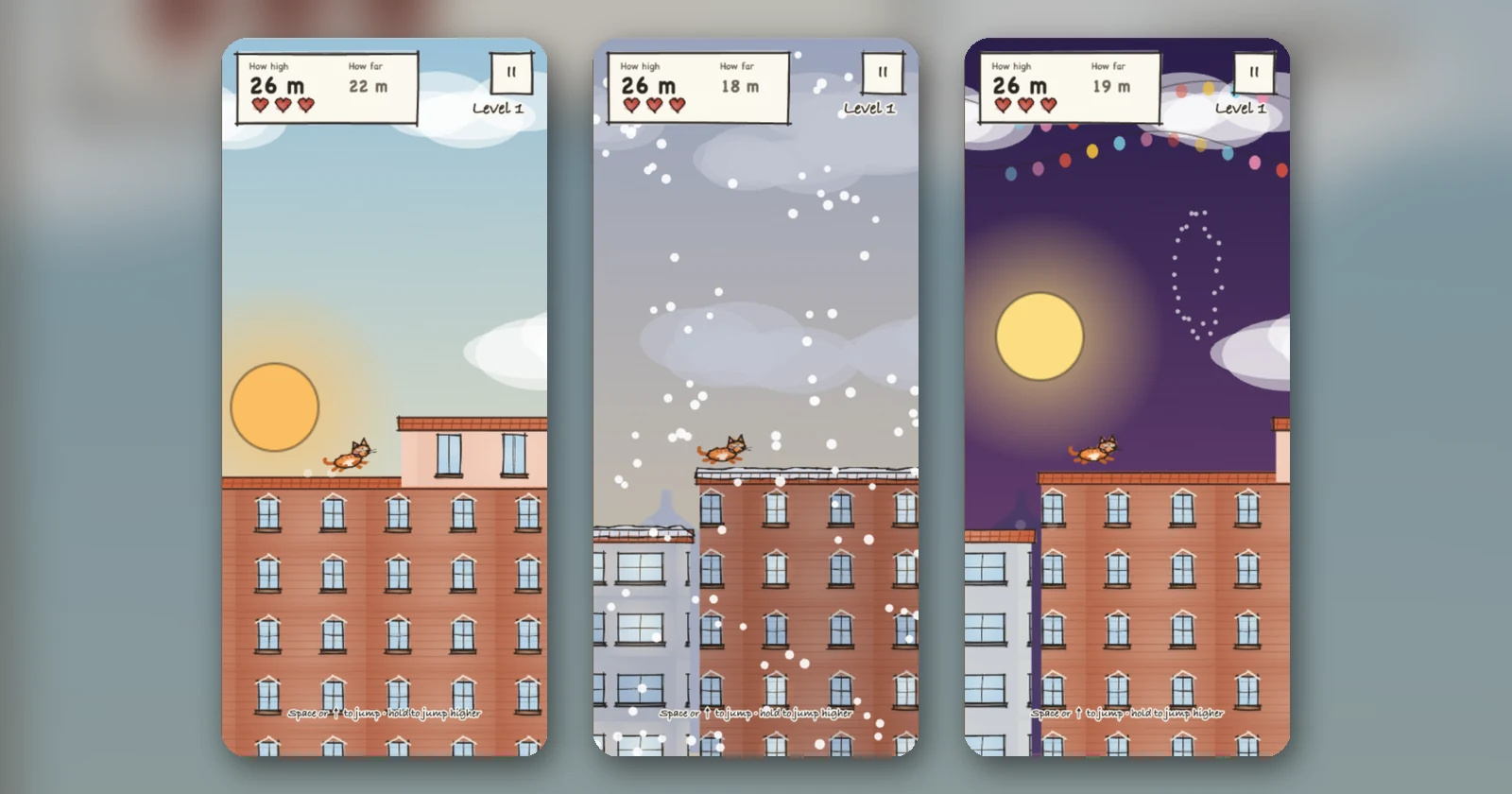
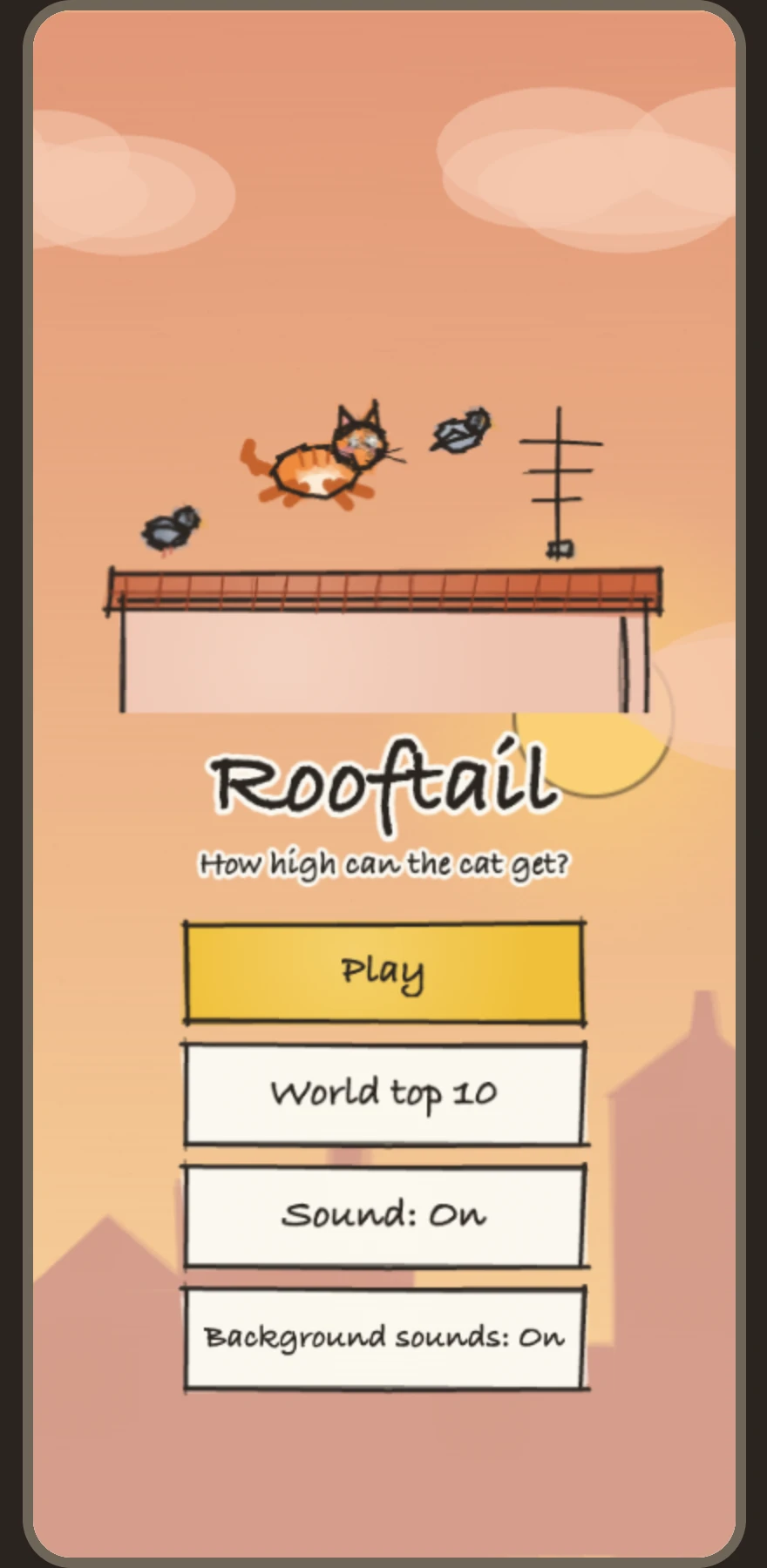
If you’ve ever wondered what building a game with an AI agent actually looks like, prompt by prompt, this is the whole story of one. A few days ago I sat down to explore Draftbit as a new user would, with no plan beyond clicking around, and four days later I had Rooftail, a game where a ginger cat runs across a city and you help it climb as high as it can. You can play it right now in your browser.
The finished game looks nothing like where it started, so below are the prompts that got it there, taken from my chat with the agent (with the typos fixed), each followed by what it turned into.
Where it started
I started from Sketch Jump, one of the game templates in Draftbit, which is an endless vertical jumper drawn on graph paper where you steer an ink drop from platform to platform.
Day 1: from a template to a cat game
Under the prompt box, Draftbit showed a few example ideas, and one of them was a platformer for kids. It was specific enough to picture right away, so I used it as my first prompt:
My prompt
A simple platform game for kids to play on a tablet. A cat runs and jumps across rooftops collecting fish, with three levels that get harder. No accounts, and nothing saved online.
The agent swapped the ink drop for a cat and the graph paper for rooftops, but kept the template’s hand-drawn renderer, which is where Rooftail’s soft, sketchy look comes from. I played it and the three levels ended too soon, so my next message was short:
My prompt
Nice, but make it infinite instead of levels. As it goes, the weather, colors, and difficulty change, so it gets more exciting.
The rest of the day went the same way. I played, then said what felt off. I asked for the cat to run forward on its own, for springs and stacked houses, and for a choice of paths. Then came the change that shaped everything after it:
My prompt
I want the homes at different heights. We can even have a street where people and cars move, and the cat climbs step by step as it goes, or falls down to the street. For now there's no way to die: if you fall, you land on the ground or a lower house.
That’s still how Rooftail works. Missing a jump drops you to a lower roof or the street instead of ending the run, which means a big fall is part of the fun. At the end of day 1, I published this version:
Days 2 and 3: making it fun to climb
Balloons started on day 1 with one line about a balloon that lets the cat fly for a while. The first version gave the cat a single balloon that popped after a few seconds, so I asked for more:
My prompt
Nice one, but there's only one balloon. It should be a bunch of balloons that pop one by one. That would be fun.
The subway took the most rounds of anything. I asked for underground subways, then for stairs as the only way in and out, then for handrails and lamps on the stairs. When I played it, I still didn’t like it:
My prompt
I don't like the subway.
- The entrance and exit look bad.
- Remove the things that block the cat in the subway, like the trash cans.
After that came more subways to choose from, then one longer subway instead of two. On day 4 I noticed the cat just rode a train and came back out, so I asked one more time to make the subway more interesting, and even challenging.
Playing every version also turned up bugs I’d never have found by reading code: buildings appearing out of nowhere, a constant hiss under everything, and at one point the cat walking on the sky. Each one was a single message describing what I saw.
The biggest change came on day 3, when I realized the part I enjoyed most was climbing:
My prompt
I want the cat to climb as high as it can using the buildings. Let's make that part of the score: the highest point reached.
That turned Rooftail from a distance runner into a climbing game. I kept tuning it after that, with easier climbs and most buildings taller than the one before (“I said ‘most’”), and the height shown big on the screen.
Day 4: getting it ready for other people
By then I wanted friends to play it and compete. I asked for a leaderboard, and the agent pointed out that the game had no backend, so scores could only stay on each device. That wasn’t what I wanted:
My prompt
No, I want a global leaderboard.
So I added a Supabase Backend app to the project and told the agent to go ahead and build it. The first published version said “can’t reach the city” instead of loading scores, because I’d published the game but not the backend. Once I published that too, it worked. Then I made it simpler:
My prompt
For the leaderboard, let's do this: no "join the leaderboard". We just keep the best 10 positions, and if a result isn't in the top 10, we drop it. Also remove the personal best. We only keep the global score.
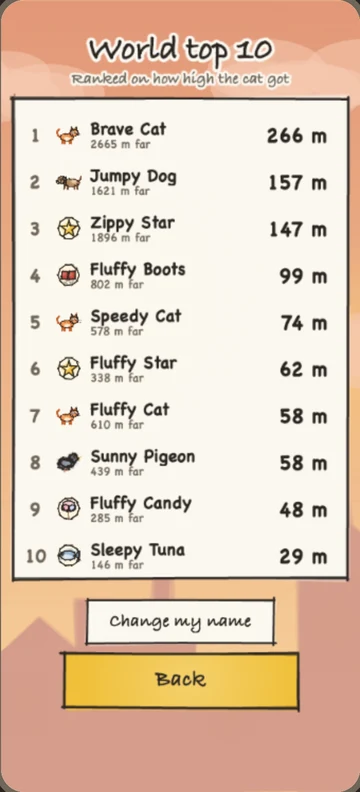
Somewhere in there, the game also changed who it was for:
My prompts
This game is no longer for kids.
The speed and difficulty should increase as the game goes on. There are two principles of games:
- challenging
- rewarding
Now the speed rises a little every 100 m, the start is faster so nobody gets bored, and the weather fades gradually through fourteen places, from a sunny morning with birdsong to a snowy afternoon and a starry night. My last prompt was to publish the game so my friends would get the new version.
Along the way, Draftbit checked the app and recommended fixes I wouldn’t have thought to ask for, like keeping every menu button visible on phones, making sure a score that couldn’t be sent goes up next time, and updating dependencies with known vulnerabilities.
Giving Rooftail its own address
Until then, people played Rooftail through a Draftbit share link, which works fine for friends but isn’t something you’d put on a poster. So we got rooftail.com, and I set it up as the game’s production address.
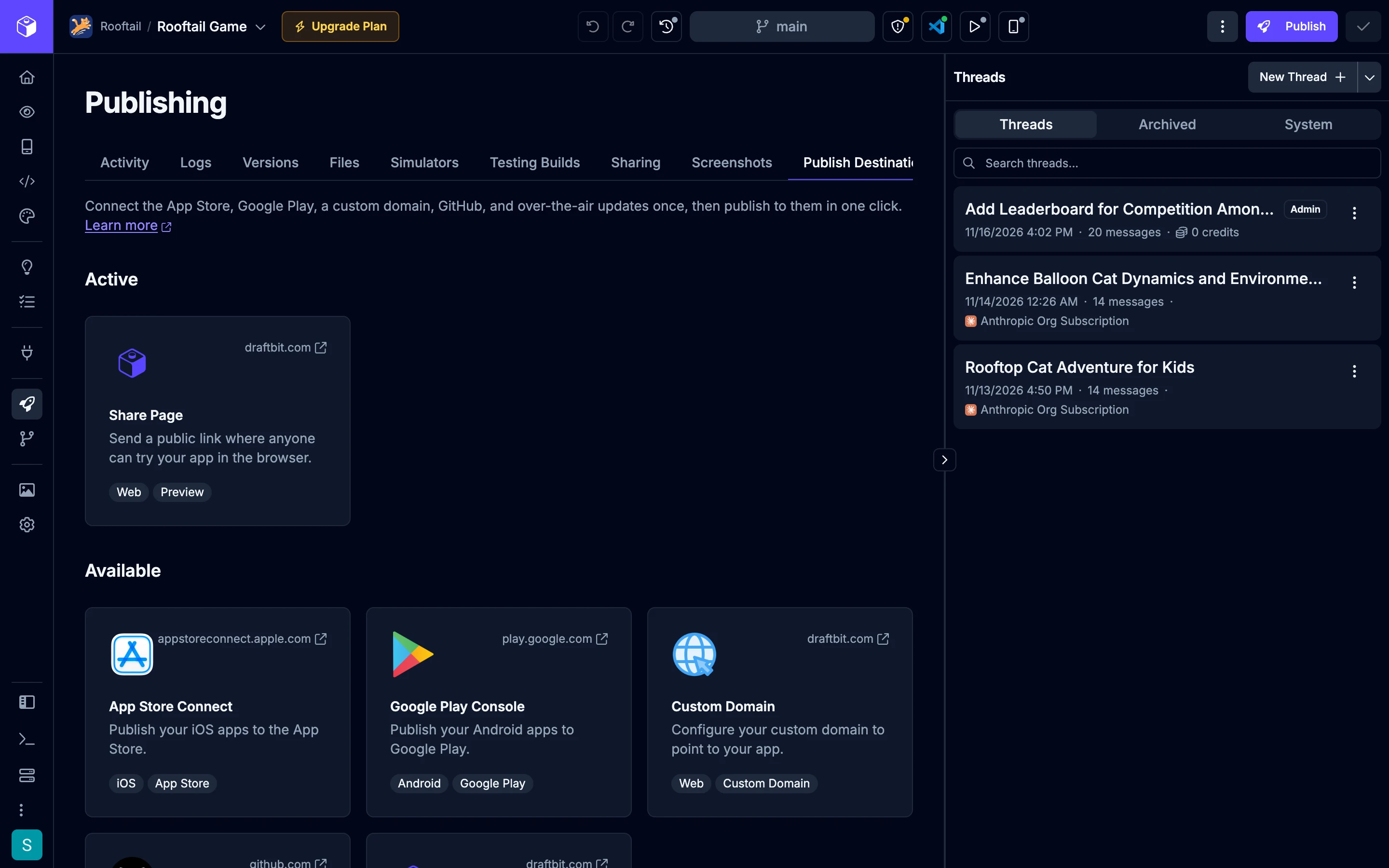
In the project’s Publishing page, I opened the Publish Destinations tab and picked Custom Domain.
With Production selected, I typed rooftail.com and saved it. Draftbit then listed the DNS records to add where the domain is registered: a CNAME that points rooftail.com at Draftbit, and two TXT records that let Draftbit issue the SSL certificate. There’s a second set for www.rooftail.com, which is optional and sends anyone who types the www to the same game.
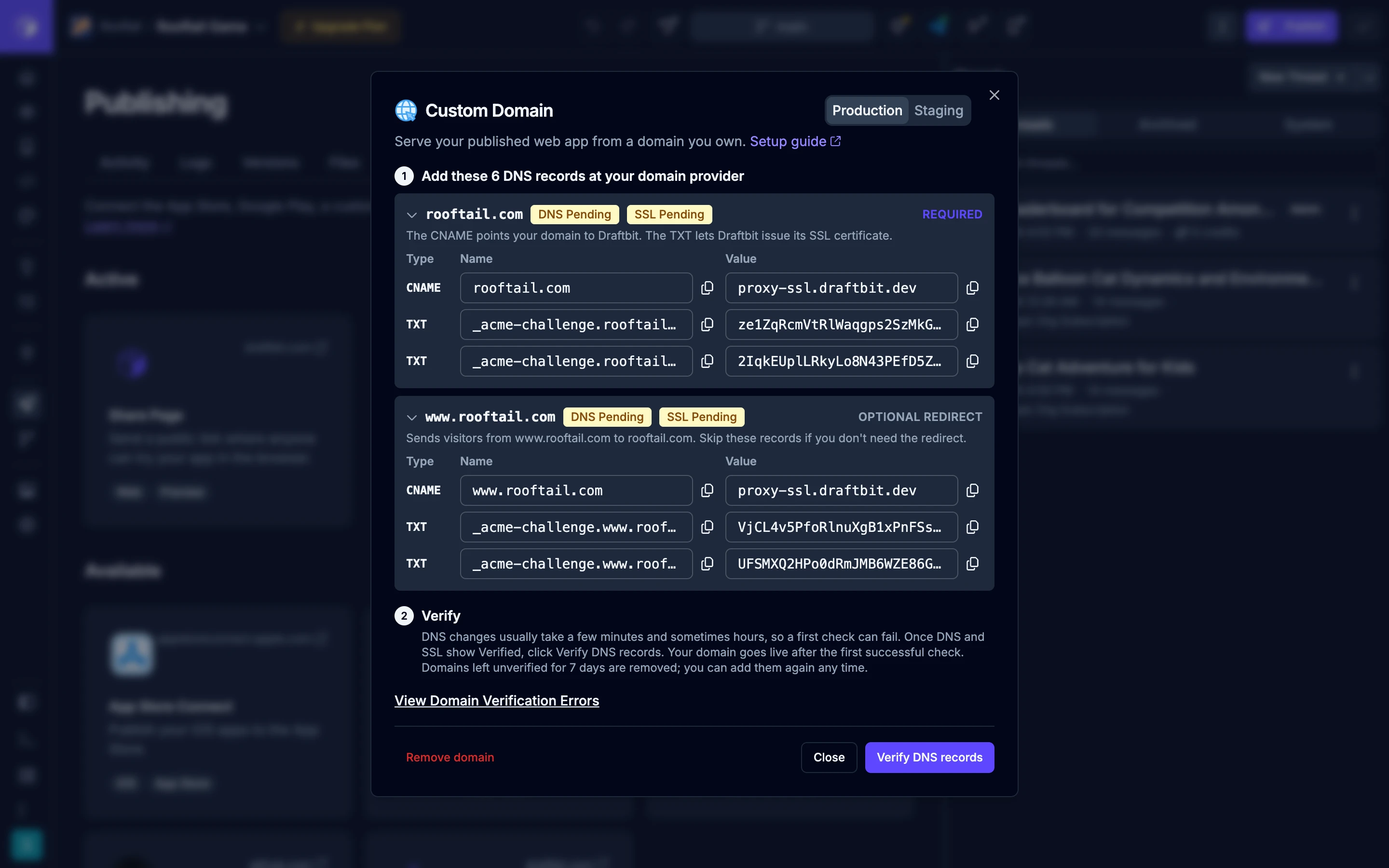
The domain is in Cloudflare, so the records went in there. Once they had been added, I went back to the same dialog and clicked Verify DNS records. Both rooftail.com and www.rooftail.com came back as verified, with SSL too.
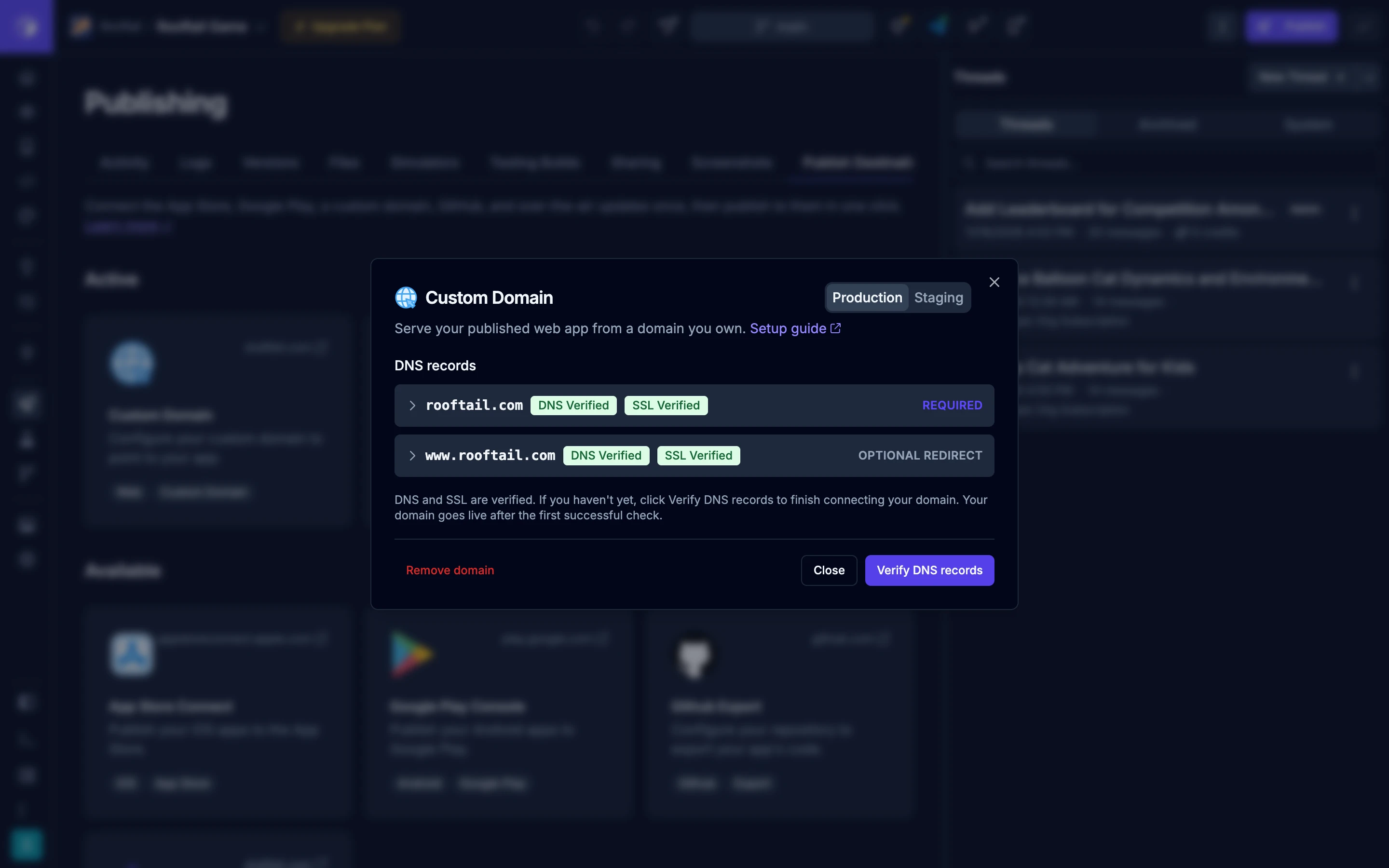
Rooftail was already published to Production, so I didn’t need to publish again. The game was live on rooftail.com as soon as verification passed.
What I’d tell someone building their first game
Play every version, and say exactly what feels off. Almost every prompt above was a reaction to something I’d just played, and none of them were polished. I’d also start with the smallest version of the core loop and only add art, sound, and scoring once that loop is fun, since the big change in Rooftail (climbing instead of running) only showed up after I’d played enough to notice what I liked. And if you want other people to play, give yourself time for that part, because a leaderboard, a backend, and publishing both pieces is its own small project.
What’s next
Next, I want to publish Rooftail so it can be installed on a phone or tablet like any other app, not just played in a browser. After that, I’ll get back to the ideas I’ve kept as tasks in the project, like two cats to pick from and more zones and surprises in the endless run.
In the meantime, give Rooftail a try and see how high you can get. If you’ve got a game idea of your own, you can start building it in Draftbit.